Clarity on Black Friday Margins
Sales up, profit down? Run this 4-step check before you set your discount.
By Ben Rosenfeld
Hi there,
Every year I see the same story.
An Amazon seller runs a 25% Black Friday deal, orders jump, the team celebrates. Then January comes, and the bank account doesn't match the excitement.
Sales were up. Profit wasn't.
Usually the reason is simple: the discount came out of a margin that was thinner than anyone realized.
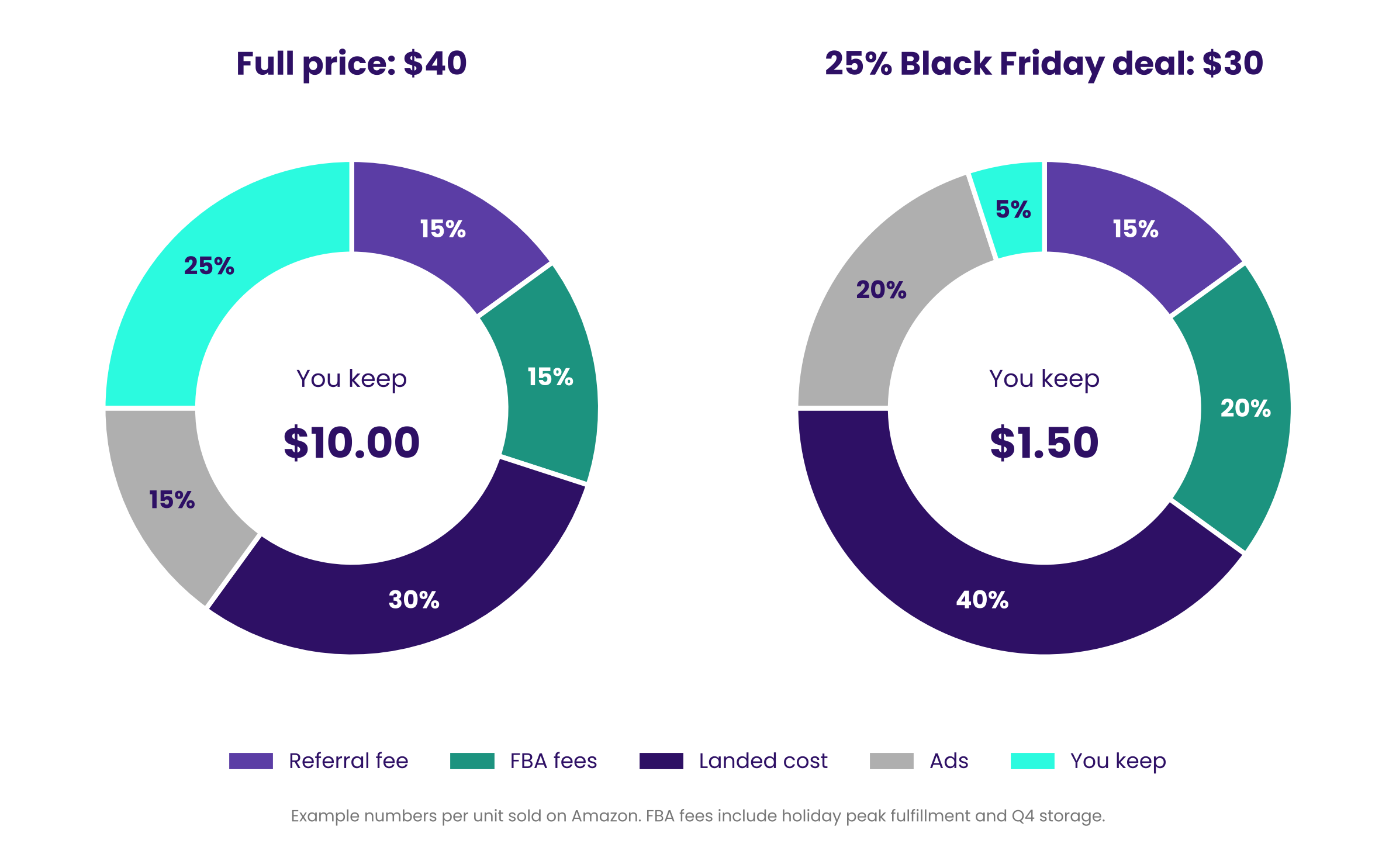
Think of every sale as a pie. Here's a $40 product on Amazon:
Amazon's referral fee: 15%, or $6.00
FBA fees: about $6.00 to pick, pack, ship and store it. Both cost more right now: holiday peak fees run October 15 to January 14, and Q4 storage costs nearly three times what it does the rest of the year.
Landed cost: $12.00 (what the product cost you to get into Amazon's warehouse)
Ads: $6.00, or 15% of sales. That's your TACoS: total ad spend divided by total sales.
What's left is your slice: $10, or 25%.
Now run the 25% deal. The price drops to $30, but only the referral fee shrinks with it. FBA fees, product cost and ad dollars stay the same (and ads usually cost more during Black Friday week). Your slice shrinks to $1.50 per unit, just 5%, before rent or payroll.
This week's tip: check your margin pie before you set your discount
What's left after every cost that comes with a sale is called contribution margin. It's the money that actually pays your overhead.
Start with the products you expect to move most. Your top five to ten sellers are enough.
Get your real Amazon fees at peak rates. Amazon's free Revenue Calculator shows the referral fee, FBA fee and storage for any product.
Build the pie for each product. One spreadsheet row: price, referral fee, FBA fees, landed cost and ad cost per unit. Run it at full price and at your planned deal price. Not sure of your margin before ads? Start with our free Gross Margin Calculator.
Set a floor and share it. Decide the smallest slice per unit you'll accept, and give that number to whoever runs your ads and deals. Anything below it gets a smaller discount, or a bundle instead of a straight percent off.
A deal that leaves you $1.50 a unit doesn't get better with volume. It ties up cash in inventory you'll have to restock at full cost, for almost nothing left over.
Want a second set of eyes on your top sellers before the 27th? Reply and tell me what you're planning. Or book a Free Books Review and we'll look at it together.
Talk soon,
Benzion
Vertical Financials | Financial Clarity for Growing Businesses
Free weekly newsletter
Financial Clarity
One practical tip every Tuesday on cash, profit, and the numbers that matter. About three minutes to read. No jargon, no fluff.
Unsubscribe anytime.
Related: our bookkeeping & fractional CFO services · ecommerce & inventory accounting · get a free books review
Get a free books review.
Find out what's costing you.
Send your last month of books. We'll audit five key areas and send a 1-page findings report within 5 business days. No card, no pitch.